The Rise of Indie Games: Hidden Gems You Shouldn’t Miss
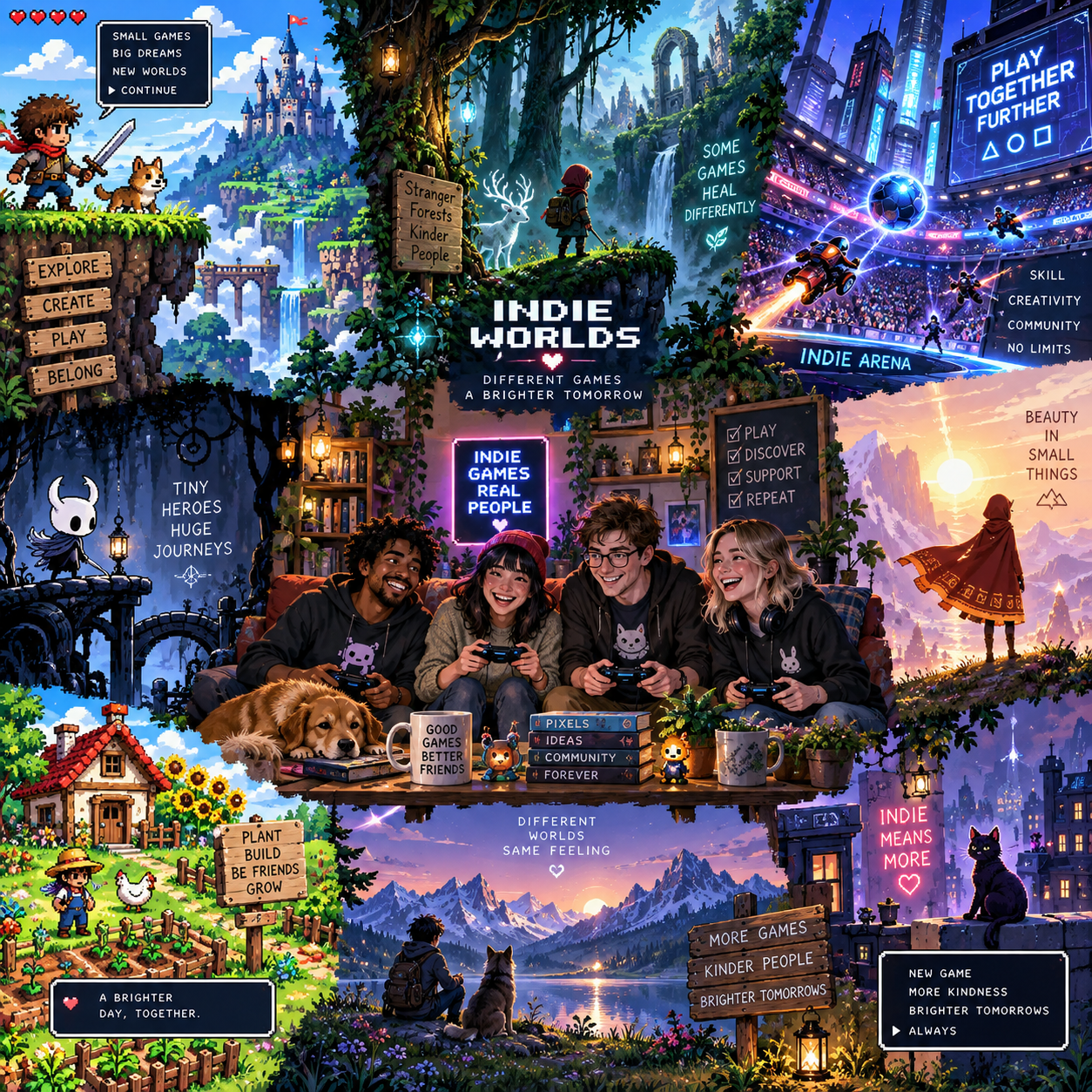
Indie games have become one of the most exciting parts of modern gaming. Independent developers now create inventive worlds, unusual mechanics, and emotionally memorable experiences that can stand beside much larger studio releases. Their games often reach players through digital distribution platforms such as Steam, itch.io, Nintendo eShop, PlayStation Store, Xbox Store, and mobile marketplaces.
For players who enjoy discovering something before it becomes widely known, the indie scene offers a deep library of hidden gems. Some are compact solo adventures; others support local co-op, online multiplayer gaming, or competitive play that can attract a dedicated gaming community. The recommendations below are selected for originality, execution, atmosphere, and the kind of lasting impression they leave on players.
Why Indie Games Are Rising in Popularity
Indie games are rising because independent developers can take creative risks that larger studios may avoid. Smaller teams often build focused experiences around one strong idea, giving players distinctive themes, unusual rules, and alternative gameplay experiences.
A major publisher usually has to consider a large budget, a broad audience, and established commercial expectations. An independent team may instead ask a narrower question: what happens if a platform game is built around momentum, or if a farming simulator becomes a quiet story about community and loss? That freedom encourages game design innovation.
Digital distribution has also lowered the barrier between creator and player. A small studio can release a game worldwide, gather feedback through forums and social media, and improve its work through updates. Players benefit from a wider range of voices, including developers exploring disability, identity, folklore, mental health, and experimental storytelling.
The trade-off is uneven quality. Indie games may have limited budgets, smaller testing teams, or slower support after launch. That uncertainty is part of the discovery process, which makes player reviews, demo versions, developer communication, and community recommendations especially valuable.
What Makes an Indie Game a Hidden Gem?
A hidden gem is an indie game with a distinctive idea, polished core experience, and strong player appeal that has not received the attention it deserves. It does not need to be obscure forever; the term describes a discovery opportunity rather than a permanent ranking.
Use the four-part GLOW test when choosing what to play:
- Gimmick: Does the game have a clear mechanical or artistic identity?
- Execution: Do controls, pacing, interface, and presentation support that idea?
- Voice: Does the game communicate a memorable mood, perspective, or theme?
- Word of mouth: Do players describe specific experiences rather than repeating vague praise?
Originality alone is not enough. A creative concept can lose its impact if the controls feel imprecise or the difficulty spikes without warning. Conversely, a familiar genre can still produce a hidden gem when it combines reliable fundamentals with a fresh setting, elegant progression, or unusually strong atmosphere.
Check the practical details before buying. Look for controller support, accessibility options, estimated playtime, save systems, and whether the game remains actively supported. A two-hour experimental puzzle game and a 60-hour role-playing game can both be excellent, but they serve very different evenings.
Hidden Gems by Genre
The best indie games span action, strategy, role-playing, puzzle, horror, and narrative adventure. The following shortlist focuses on titles that offer a clear identity and a strong fit for different gaming preferences.
Action and platforming
Hades combines fast combat, expressive characters, and repeatable runs into a roguelike action game that makes failure feel productive. Dead Cells offers demanding exploration, responsive combat, and a large collection of weapons for players who enjoy learning through repeated attempts. For a more compact platforming experience, Celeste pairs precise movement with a thoughtful story about persistence and self-doubt.
Strategy and simulation
Into the Breach turns tactical combat into a puzzle of positioning, prediction, and sacrifice. Each enemy action is visible, so success depends less on luck than on finding the least damaging sequence. Against the Storm blends city building with roguelite progression, asking players to adapt their settlement plans to changing conditions. These games suit players who enjoy decisions more than reflexes.
Role-playing games
Disco Elysium is a dialogue-driven role-playing game where skills shape the protagonist’s thoughts, conversations, and investigation. It rewards attention to language rather than combat mastery. Sea of Stars offers a more traditional turn-based adventure with colorful environments, timed actions, and a welcoming sense of classic role-playing design.
Puzzle and problem-solving
Baba Is You lets players alter the rules of each level by moving words such as “Baba,” “Is,” and “You.” Its puzzles begin simply, then challenge the assumptions players have formed about how games work. The Case of the Golden Idol delivers a series of investigation puzzles that reward close observation and logical reconstruction.
Horror and narrative adventure
Signalis uses limited resources, unsettling environments, and fragmented storytelling to create survival horror with a distinctive science-fiction identity. Oxenfree focuses on dialogue, exploration, and supernatural tension, allowing conversations to flow naturally while the player moves through its island setting. Neither depends on constant action; both understand that anticipation can be more frightening than confrontation.
Indie Games for Solo and Social Players
Indie games serve solo players, local co-op groups, online communities, and competitive audiences through focused multiplayer design. The right choice depends on whether you want personal immersion, shared problem-solving, or repeatable matches.
Solo players can find rich long-form experiences in Stardew Valley, Outer Wilds, and Return of the Obra Dinn. These games reward curiosity and attention rather than a high actions-per-minute count. They are good choices when you want to set your own pace and absorb a world without coordinating with others.
For local co-op, Overcooked! 2 turns communication into controlled chaos, while Keep Talking and Nobody Explodes gives one player a bomb and the others a manual. The second game is particularly effective for groups because success depends on describing information clearly under pressure. Choosing these titles for a party means accepting a louder, less predictable session than a conventional single-player game.
Online multiplayer fans can explore Deep Rock Galactic, a cooperative shooter built around class roles, exploration, and teamwork. Risk of Rain 2 supports escalating co-op runs in which players balance individual upgrades with the increasing danger of staying in a level too long.
Competitive gaming also has space for independent releases. Rivals of Aether offers platform-fighter mechanics suitable for local matches and community tournaments, while Trackmania shows how time trials can create a highly competitive loop around precision, routing, and leaderboard improvement. These games may not have the same tournament infrastructure as major esports titles, but their focused rules make them accessible to grassroots events.
How to Choose Your Next Indie Game
To choose your next indie game, filter recommendations by genre, platform, playtime, difficulty, multiplayer features, and competitive potential. A short checklist prevents an attractive trailer from leading to the wrong purchase.
- Start with your available time. Choose a short narrative game for a weekend, a roguelike for repeat sessions, or a large role-playing game for a long-term project.
- Match the game to your platform. Check PC, Nintendo Switch, PlayStation, Xbox, or mobile availability, along with performance requirements and controller support.
- Choose your preferred pressure level. Look for adjustable difficulty and accessibility settings if you prefer a relaxed experience. Select precision platformers, tactical games, or ranked multiplayer if challenge motivates you.
- Confirm the social format. Distinguish local co-op from online co-op, shared-screen play from separate-device multiplayer, and casual matches from ranked competition.
- Test the community fit. Read recent discussions to see whether servers are active, matchmaking works reliably, and tournament organizers have community tools available.
A useful rule is to choose two filters you care about most and one you are willing to compromise on. For example, a player seeking local co-op may accept simple graphics, while a competitive player may prioritize stable frame rates and input responsiveness over story length. Demos, free weekends, wishlists, and curated collections on digital distribution platforms can reduce the risk.
Why Indie Games Matter to the Wider Gaming Scene
Indie games matter because they expand what games can express, how they can be played, and who gets to shape gaming culture. Independent developers often test ideas that later influence larger productions and inspire new communities.
A small title can change expectations around storytelling, interface design, procedural generation, or accessibility. It can also give players a shared language. A local tournament built around a platform fighter, puzzle game, or racing challenge may begin with a handful of friends and grow into a regular community event.
Indie games also make discovery more participatory. Players recommend titles through streaming, fan guides, speedrunning, modding, Discord groups, and convention meetups. That activity gives lesser-known developers a route to attention that does not depend entirely on a major advertising campaign.
There are limitations. Digital storefronts are crowded, visibility can change quickly, and some excellent games lack localization or accessibility features. Supporting an indie game may mean leaving constructive feedback, sharing it with the right audience, or buying from an official store when possible. Those small actions help sustain a broader ecosystem of experimentation.
Start Your Indie Game Watchlist
Start your indie game watchlist by choosing one title for each mood: focused solo play, cooperative fun, thoughtful strategy, and competitive replay. A varied list makes it easier to find the right experience when your available time or group changes.
- Solo exploration: Outer Wilds, Disco Elysium, Celeste
- Action and challenge: Hades, Dead Cells, Signalis
- Strategy and puzzles: Into the Breach, Baba Is You, The Case of the Golden Idol
- Local co-op: Overcooked! 2, Keep Talking and Nobody Explodes
- Online co-op: Deep Rock Galactic, Risk of Rain 2
- Competitive communities: Rivals of Aether, Trackmania
The rise of indie games has made discovery one of gaming’s best rewards. Look beyond the most visible releases, follow recommendations from players with similar tastes, and give unfamiliar mechanics a fair trial. Your next favorite game may come from a team small enough to take risks that the rest of the industry has not considered.
Indie Games FAQ
What is an indie game?
An indie game is a title made by an independent developer or studio that operates with limited reliance on a major publisher. Team size, budget, and publishing arrangements vary, so “indie” describes independence more than a specific visual style.
Why are indie games often considered innovative?
Indie games are often innovative because smaller teams can focus on unusual mechanics, personal themes, or niche audiences without following the expectations of a large franchise. That freedom can produce both breakthroughs and rough edges.
Where can players discover indie games?
Players can discover indie games on Steam, itch.io, Nintendo eShop, PlayStation Store, Xbox Store, mobile marketplaces, demo festivals, livestreams, and gaming community forums. Recent player discussions are useful for checking current performance and multiplayer activity.
Are indie games suitable for multiplayer or competitive play?
Yes. Indie games include local co-op, online multiplayer, platform fighters, racing games, tactical matches, and community tournament titles. Check player counts, matchmaking, controller support, server health, and spectator features before organizing an event.
How can I find indie games that match my preferred genre?
Begin with a familiar genre, then filter by platform, playtime, difficulty, and social format. Read descriptions for specific mechanics, watch a few minutes of unedited gameplay, and use demos or free trials when available.